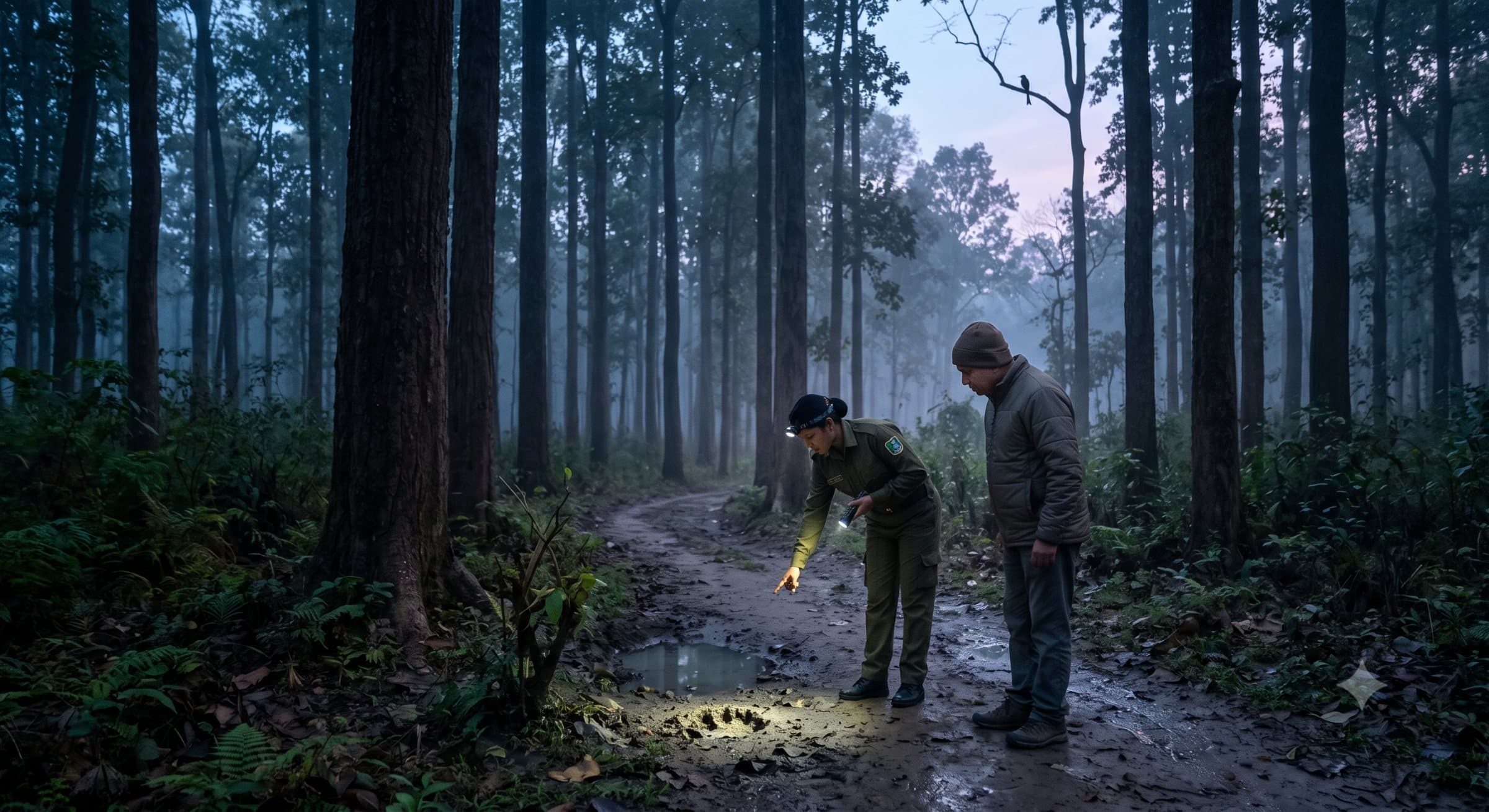
The forest is loudest before it looks alive. A drongo calls from somewhere above the road, leaves move in a branch that has no visible bird, and the undergrowth keeps its own small conversation. At this hour the sal trees are dark columns against a pale sky.
A forest guide does not promise sightings. Instead, she points out the evidence that a hurried visitor would miss: a fresh scrape in the mud, a broken stem, the clean edge of a hoofprint beside a pool. Wildlife is present even when it refuses to become a photograph.
The Dooars forests are working landscapes as well as habitats. Villages, tea estates, rivers, roads, and animal corridors meet at their edges. Protecting the forest therefore depends on small daily decisions: keeping noise down, respecting closures, not feeding animals, and listening to the people who live beside the boundary.
By sunrise, the road has changed completely. The forest has not become less mysterious. It has simply become easier to see, which is not always the same thing as understanding it.