There are places whose names simply identify them. And then there are places whose names tell a story.
Dooars is one of them.
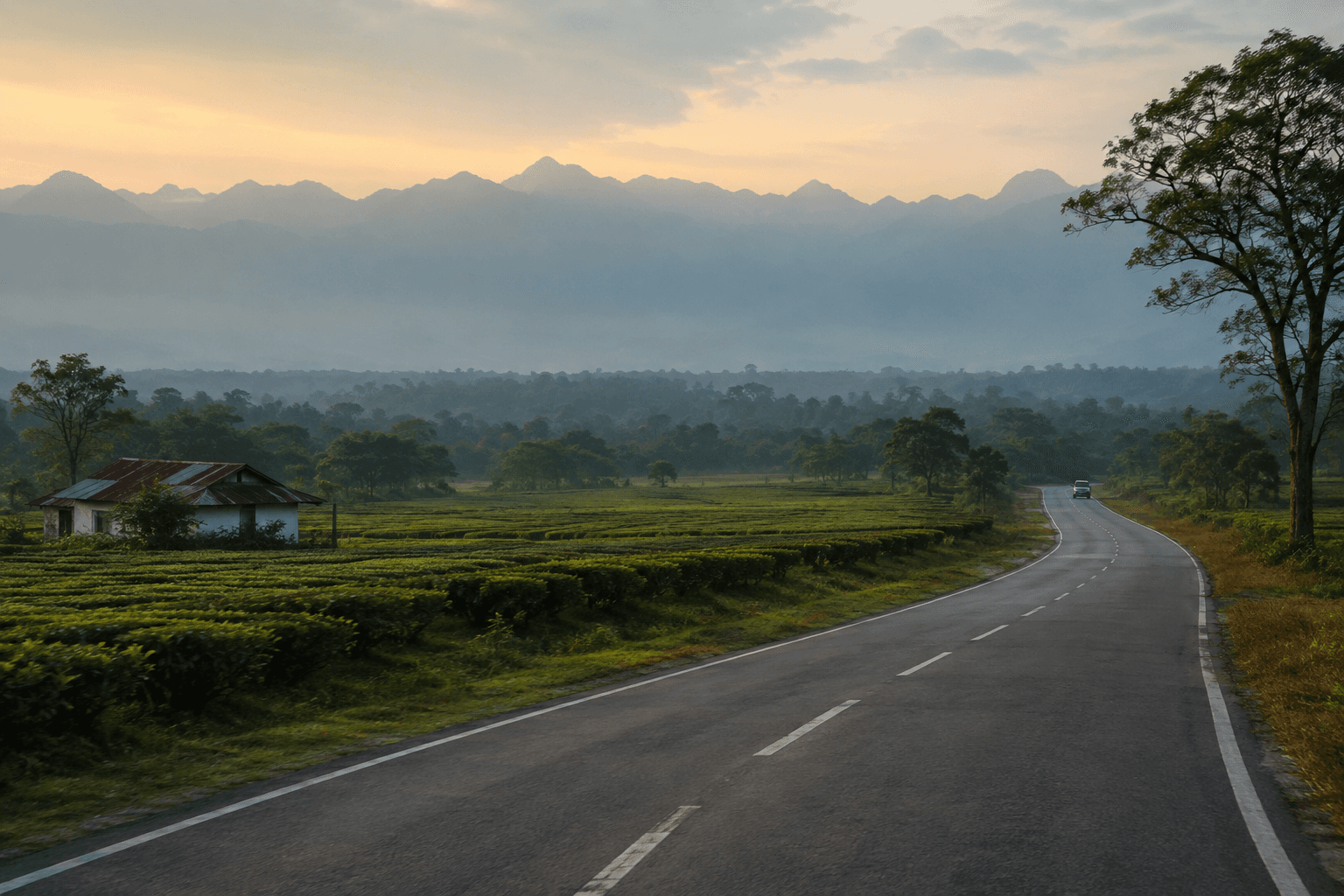
Stretching along the foothills of the Eastern Himalayas in North Bengal, Dooars is known today for its forests, tea gardens, rivers, wildlife and quiet villages. It is also closely associated with routes toward Bhutan and Northeast India. But before it became a destination for wildlife safaris and road trips, the name Dooars carried a much more literal meaning.
So, how did Dooars get its name?
The answer begins with a word that means “doors.”
What Does “Dooars” Mean?
The word Dooars is derived from the word duar, meaning door or gateway in Bengali, Assamese and Nepali.
The name reflects the region's historical and geographical position as a gateway toward Bhutan and the Northeast. The Tea Board of India describes the Dooars-Terai region as lying along the Himalayan foothills, with Dooars bordered by Bhutan and Darjeeling in the northwest, Cooch Behar and Bangladesh to the south, and Assam to the east.
That location gives the name a deeper meaning.
Dooars was not simply a place between mountains and plains. It was a landscape through which people, goods and cultures moved between the Himalayan kingdom of Bhutan and the plains.
In other words, Dooars was a doorway.
Why Was Dooars Important?
Geography has always played a major role in Dooars' story.
The region sits below the Himalayan foothills, where forests, rivers, grasslands and plains meet. Today, this landscape is one of the defining features of North Bengal. The same geography that makes Dooars attractive to travelers also helped shape its historical importance.
The Tea Board of India identifies Dooars as a major tea-growing region and notes that its tea-growing areas extend across Jalpaiguri and parts of Cooch Behar. Tea is now one of the defining features of the region, alongside its forests and wildlife.
But Dooars is not just about tea.
Its forests are home to remarkable biodiversity. West Bengal Tourism highlights the region's protected landscapes and wildlife, including the one-horned rhinoceros, elephants, bison and numerous bird species. Gorumara National Park, for example, lies in the Terai region of Dooars at the foothills of the Eastern Himalayas.
This combination of gateway, forest and agricultural landscape is what makes Dooars so distinctive.
